
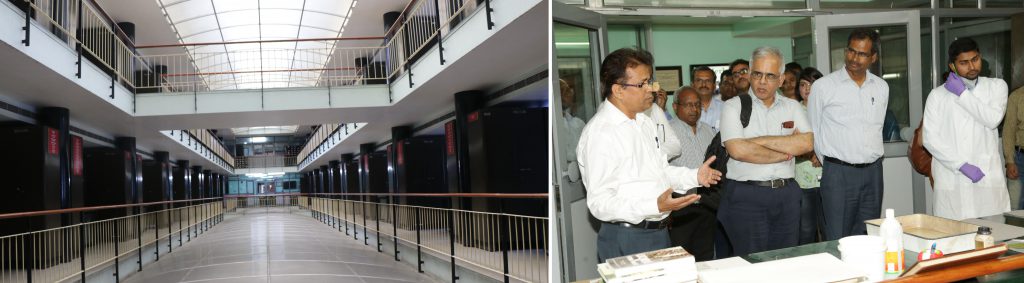
Herbarium, a store house of preserved plant materials that may be in dried form mounted on a hard sheet of paper or may also be stored in boxes or kept in alcohol or other preservatives along with all essential associated data, is a precarious primary resource for taxonomy, biodiversity, ecology and evolutionary researches. The plants collected from far and wide are kept in pigeon holes of steel and wooden cupboards in the herbarium according to some accepted system of classification after doing their proper processing and identification. The concept of herbarium preparation was first invented by Luca Ghini, Professor of medicine and botany at the University of Pisa during the 16th century. Primarily, herbarium specimens act as reference material for plant identification and authentication since beginning, but, subsequentlythey have been used for cytology, palynology, phytogeography, anatomy, conservation biology, phenology and climate change studies. In addition, specimens are now also utilised for DNA extraction to study phylogeny, DNA barcode and evolutionary processes. They also act as vouchers to validate scientific observations.
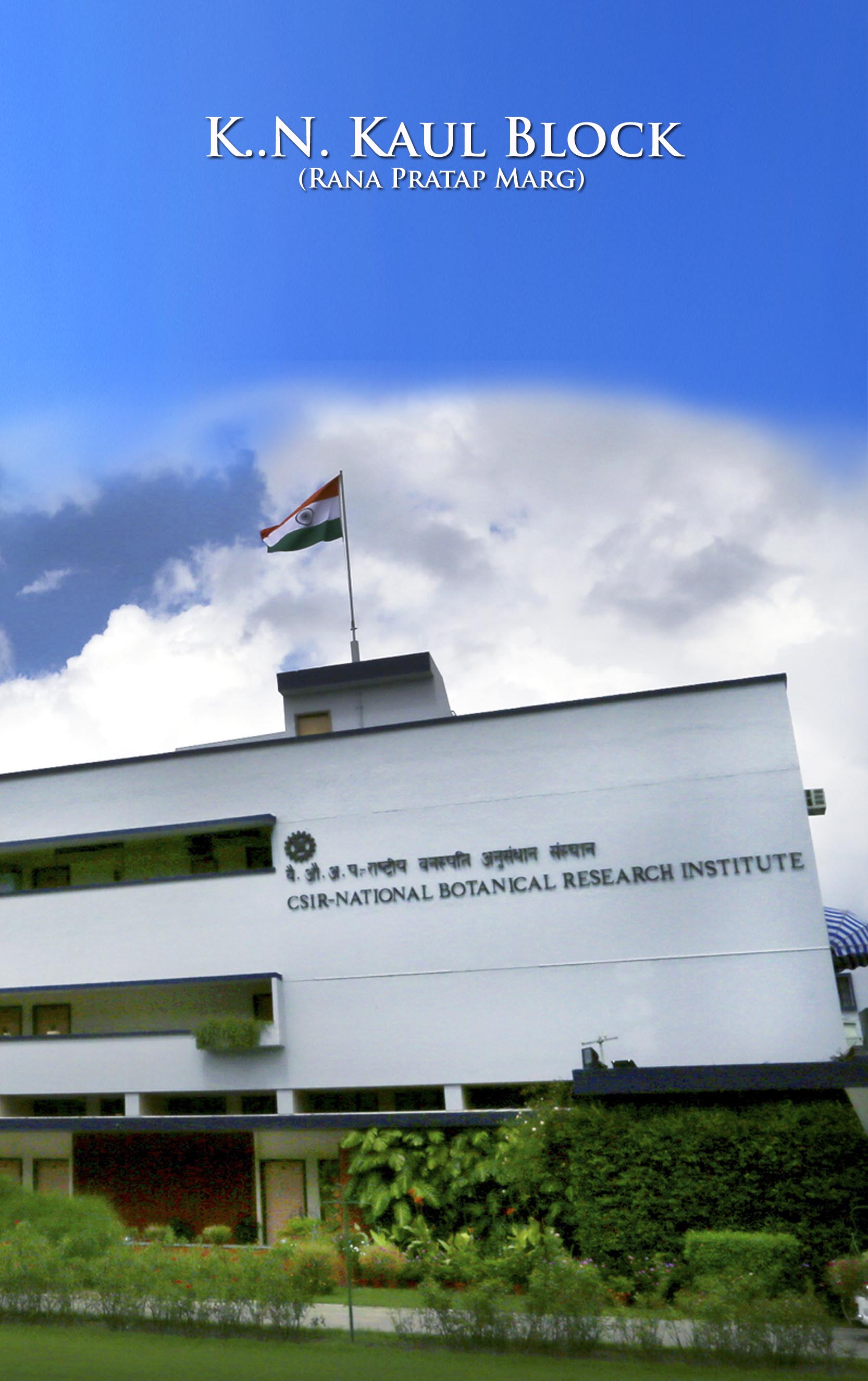
The herbarium of CSIR-National Botanical Research Institute, Lucknow was established in 1953 by institute founder Director Prof. K.N. Kaul. It is a an internationally recognised herbarium with its acronym LWG and has been designated as a ‘National Repository of Indian flora’ by the National Biodiversity Authority of India in 2006 under subsection (1) of section 39 of the Biological Diversity Act, 2002. The CSIR-NBRI herbarium which is third largest in the country, contains about 2, 86, 927 specimens, of which 1, 00, 369 specimens belong to angiosperms, 500 to gymnosperms, 5,258 to pteridophytes, 15,000 to bryophytes, 2473 to algae and 1,47,827 to lichens. The herbarium also holds 240 type specimens and about 820 type photographs. All these collections have been made under different research programmes from different biogeographic zones of India. It also possesses many specimens received as gift from several countries like Australia, Brazil, Myanmar, Canada, Canary Islands, Germany, Japan, Java, Netherland, Nepal, Norway, Sweden, UK, USA, USSR, etc. under herbarium exchange programme. The entire angiosperm collections have been arranged according to Bentham and Hooker’s system of collection (1867–1883) only up to family level, while the genera under each family have been arranged alphabetically for the sake of convenience. The species have been kept according to Indian state wise in different bundles under the genus.
Our herbarium is actively engaged in floristic and revisionary studies apart from its other activities. Time to time it also conducts various advance training programmes on plant taxonomy and biosystematics for young researchers and faculties. The herbarium also caters the need of other scientists working in the institute on various aspects in the plant collection and identification. It also helps others working in different universities and institutions in identification and authentication of plant materials and maintaining their voucher specimens.
| General Instructions (For identification and authentication of Plants, Algae and Lichen specimens) |
Download |
| Policy for the loan of herbarium specimens | Download |
| Form for Loan of Herbarium Specimens | Download |
| Request Form for Herbarium Consultation | Download |
| Form for Photographs / Image Supply Agreement | Download |
| Requisition Form (For identification and authentication of Plants, Algae and Lichens) |
Download |